
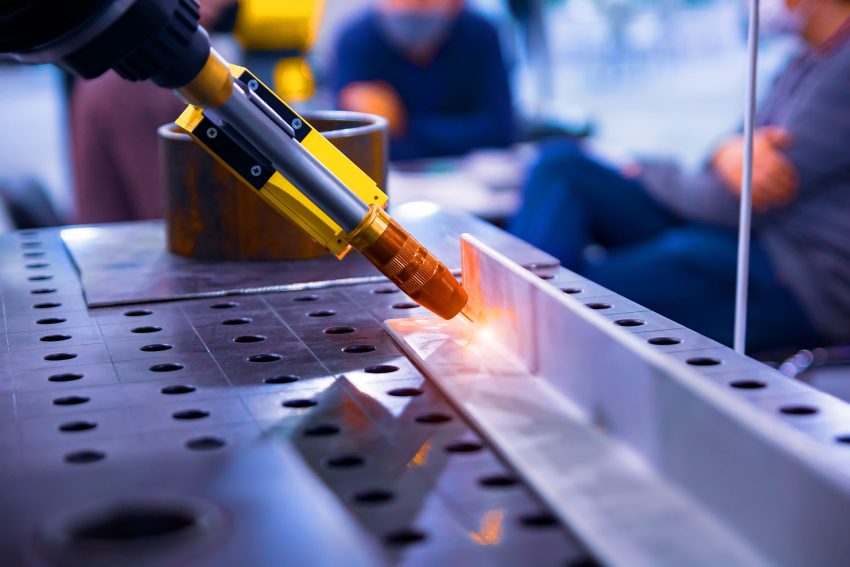
For decades, aerospace manufacturing has relied on welding methods that balance precision, strength, and repeatability. The demands are high. Components are often lightweight, tolerances are extremely tight, and even small amounts of distortion can create costly downstream problems. Now, handheld laser welding is beginning to reshape those expectations.
What was once viewed as a specialized technology reserved for automated production lines is becoming accessible to a wider range of manufacturers. Handheld laser systems combine accuracy with ease of use, offering a practical solution for shops looking to improve productivity without sacrificing quality. At the same time, the technology is moving so quickly that industry standards are racing to keep up.
Why Aerospace Manufacturers Are Embracing Laser Welding
The aerospace sector has little room for error. Thin-gauge metals, exotic alloys, and lightweight assemblies demand welding processes that minimize heat input while maintaining structural integrity. Traditional arc welding methods remain effective, but they often introduce challenges such as distortion, burn-through, and lengthy postweld cleanup. Handheld laser welding addresses many of these issues by concentrating energy into a much smaller area.
The result is a narrow, precise weld with less overall heat transferred into the surrounding material. That means fewer dimensional changes, reduced warping, and less corrective work after welding. For an industry where every gram and every minute matter, those advantages are significant.
Expanding the Welding Workforce
One of the biggest challenges facing aerospace and defense manufacturers is the ongoing shortage of skilled welders. Recruiting experienced professionals has become increasingly difficult, while production demands continue to rise. Handheld laser welding offers an unexpected advantage: it reduces the learning curve.
Traditional welding requires operators to master several variables at once, including torch angle, travel speed, filler metal addition, arc length, and contact-tip-to-work distance. New welders often need weeks or months of practice before they can consistently produce quality welds.
Laser welding simplifies many of those variables. Modern systems often use drag-tip designs and integrated wire feeding that help guide the operator through the process. Because of this, entry-level employees can become productive much faster than they could with conventional methods.
This does not replace experienced welders. Instead, it allows manufacturers to deploy their most skilled professionals where they are needed most while enabling newer operators to handle appropriate production tasks.
Lower Costs and Faster Production
In a competitive manufacturing environment, efficiency matters just as much as quality. Automated laser welding systems have long delivered exceptional results, but their cost has often placed them beyond the reach of smaller operations. Handheld laser welding changes that equation.
Compared to large robotic laser cells, handheld units require a smaller investment and can often be implemented without hiring dedicated robotics programmers or automation engineers. This opens the door for small and midsize aerospace suppliers to take advantage of laser technology. The productivity gains extend well beyond the initial purchase price.
Manufacturers using handheld laser welding frequently report dramatic reductions in cleanup and straightening time. The focused nature of the process creates less spatter and a cleaner finished weld, reducing or even eliminating some secondary operations. In some production environments, tasks that once required extensive measuring, marking, and intermittent welding can now be completed with continuous welds and far less setup. Small improvements add up quickly, creating substantial reductions in overall production time.
Reducing Distortion in Thin Materials
Heat management is one of the greatest challenges in aerospace fabrication. Lightweight aluminum alloys, stainless steels, and specialty materials can distort easily when exposed to excessive thermal input. Handheld laser welding naturally reduces that risk.
Because the laser beam delivers concentrated energy exactly where it is needed, there is less heat spread into the surrounding material. Components stay flatter. Tolerances remain tighter. Burn-through becomes less common. This level of control creates opportunities that were once difficult to achieve. Some manufacturers have found they can use thinner materials while maintaining strength requirements. Others have reduced or eliminated secondary operations such as hand straightening, rework, or excessive machining caused by heat distortion.
A process that starts with a cleaner weld often ends with a more efficient production line.
Safety Must Remain the Priority
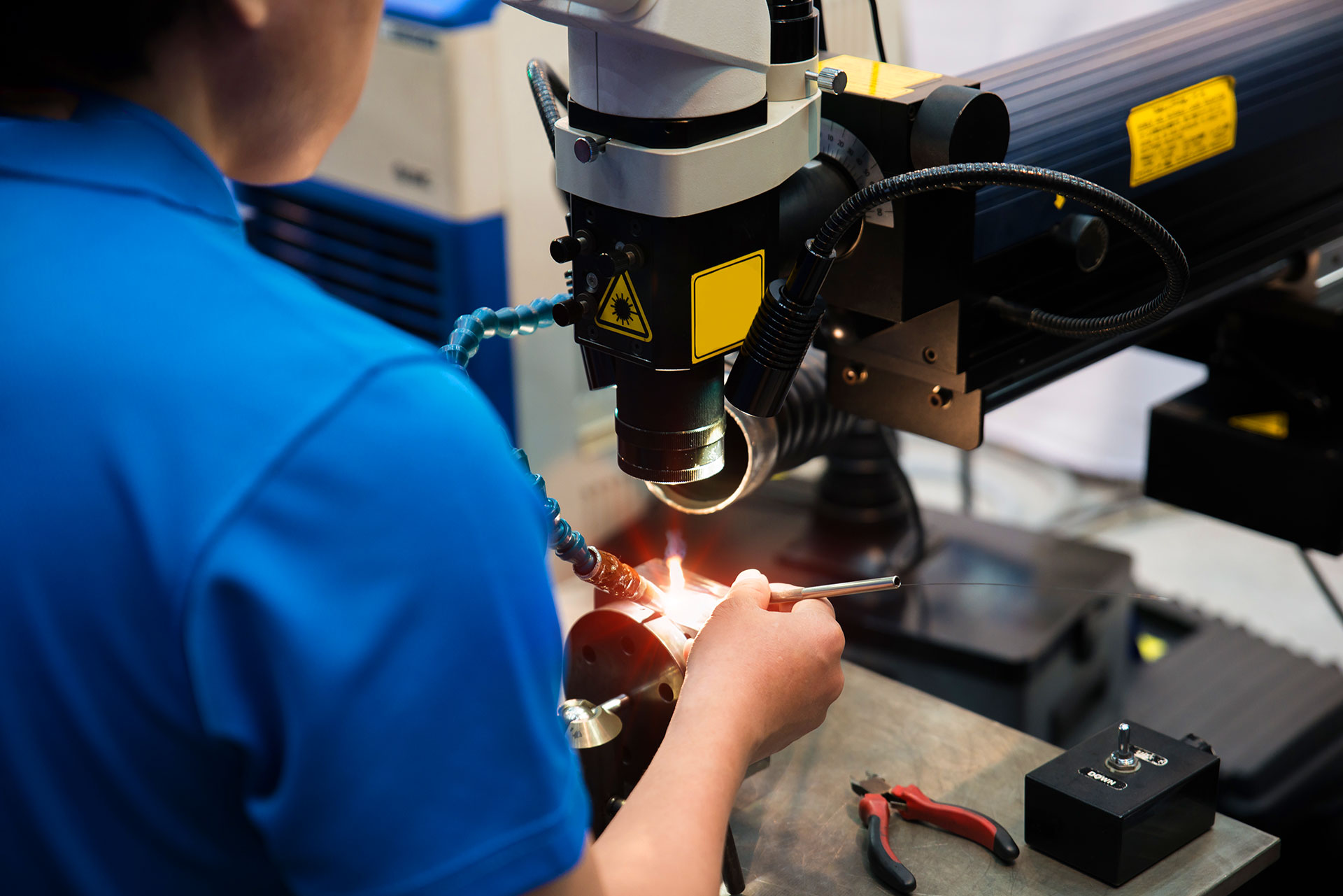
Despite its ease of use, handheld laser welding is not a casual process. The laser beam itself presents hazards that require strict control measures and proper operator training. Most handheld laser systems are classified as Class 4 lasers, meaning they require dedicated safety protocols to protect operators and nearby personnel.
Many advanced systems include integrated protective features such as:
- Back-Reflection Sensing
- Plasma Detection Systems
- Continuity Sense Clamps
- Emergency Stop Controls
- External Safety Interlock Connections
Back-reflection sensing helps protect both the operator and the equipment by shutting down the system if laser energy reflects back into the optics. Plasma detection prevents laser emission if the torch is not correctly positioned over the workpiece, while continuity sensing ensures that the nozzle and workpiece are properly connected before activation. These built-in technologies help reduce risk, but they are only one part of a complete safety strategy.
The Growing Role of the Laser Safety Officer
The implementation of handheld laser welding also introduces new responsibilities for manufacturers. ANSI guidance for Class 4 laser systems requires organizations to designate a laser safety officer, commonly known as an LSO. The LSO oversees operator training, establishes safe operating procedures, and ensures that the laser-controlled area is properly managed. This includes evaluating barriers, warning systems, and personal protective equipment.
Operators themselves must wear laser-rated eye protection and specialized welding helmets equipped with filters designed for infrared wavelengths. Conventional welding helmets alone do not provide adequate protection against laser exposure.
Creating a safe environment is every bit as important as producing a quality weld.
The Evolution of Welding Standards
Perhaps the most fascinating part of handheld laser welding is that the technology is advancing faster than the standards governing it. At present, there is no dedicated AWS specification written specifically for handheld laser welding in aerospace manufacturing. Instead, industry groups and manufacturers are drawing from existing automated laser welding guidance while collecting real-world data from early adopters.
Committees within AWS are actively working to develop recommendations that reflect the unique characteristics of handheld laser welding. These future standards will likely incorporate lessons learned from manufacturers already using the technology successfully.
Until those standards are finalized, many companies rely on established qualification procedures combined with engineering approval and internal validation methods.
Looking Ahead
Handheld laser welding is not replacing every conventional welding process, nor should it. There will always be applications where traditional arc welding remains the best solution. What this technology offers is choice. It gives manufacturers a process that can reduce distortion, simplify operator training, shorten production cycles, and improve consistency on challenging aerospace components. It also encourages the industry to rethink how welding standards are developed in an era of rapid technological change.
The future of aerospace fabrication will almost certainly include handheld laser welding. As new standards emerge and more manufacturers adopt the process, it is becoming clear that this technology is not simply another tool in the shop. It is helping redefine what modern welding can look like.
Frequently Asked Questions
What Is Handheld Laser Welding?
Handheld laser welding uses a portable laser welding gun to create precise, low-heat welds with minimal distortion and high travel speeds.
Why Is Handheld Laser Welding Popular in Aerospace?
It is especially useful for thin materials and precision components because it reduces heat input, minimizes warping, and lowers the risk of burn-through.
Is Handheld Laser Welding Easier to Learn?
Yes. Many systems simplify operator control, allowing newer welders to become productive more quickly than with some traditional welding methods.
Does Handheld Laser Welding Save Time?
It can. The process often reduces weld preparation, postweld cleanup, straightening, and rework, helping improve overall production efficiency.
What Safety Measures Are Required?
Operators should use laser-rated eye protection, appropriate laser-safe helmets, and work within a properly controlled laser area that includes built-in safety features and emergency systems.
Source:
www.aws.org